
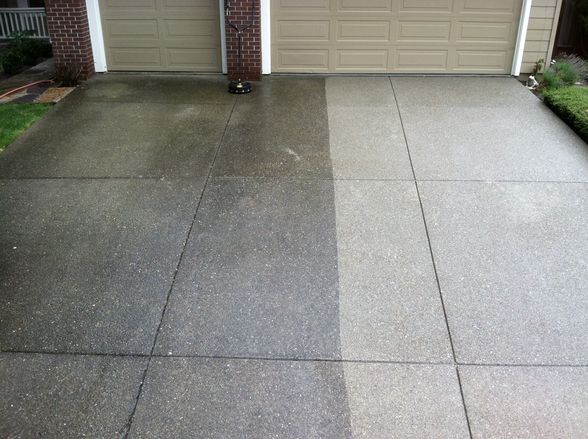
Ah, Vancouver; where the rain keeps everything green, but also keeps driveways looking… less than fresh. Whether it’s moss, grime, or that weird black stuff that magically appears every winter, a dirty driveway is the unspoken villain of curb appeal.
So, can power washing damage your driveway? Or is it the secret weapon to keeping your home looking sharp?
Let’s break it down.
The short answer: yes, power washing can damage your driveway if you do it wrong.
Power washing is like coffee; amazing when done right, a disaster when overdone.
Used properly, power washing can make a tired driveway look brand new. But crank up the pressure too high, get too close, or use the wrong technique? You could end up blasting away more than just dirt.
The goal isn’t maximum power. It’s the right amount of pressure for the surface you’re cleaning.
Here’s how to do it the right way.
What CAN Power Washing Damage?
Concrete That’s Too New
Just had a fresh concrete pour? Hold off on power washing until it has had enough time to properly cure.
New concrete needs time to strengthen, and aggressive pressure too soon can damage the surface.
If you’re not sure whether your new driveway is ready for power washing, it’s always worth checking with your concrete contractor first.
Already Cracked Driveways
Vancouver weather can already do a number on concrete. If your driveway is full of cracks or areas that are starting to deteriorate, aggressive pressure washing can make existing damage worse.
High-pressure water can get into cracks and weak spots, potentially causing further deterioration.
So before you start blasting away, take a quick look at the condition of your driveway. If it’s already damaged, it may need more than a good clean.
Using Too Much Pressure
More power isn’t always better!
If you blast your driveway too hard, you could strip away a protective sealant—or worse, etch permanent lines into the concrete.
You know those weird zebra stripes you sometimes see on freshly pressure-washed driveways? That’s usually a sign of inconsistent pressure or technique.
Not exactly the look you were going for.
What Power Washing WON’T Damage (If Done Right)
The good news? Power washing can be perfectly safe for many driveway surfaces when you use the right pressure, equipment, and technique.
Properly Cured Concrete
If your driveway is properly cured and in decent shape, controlled power washing can safely remove dirt, moss, algae, and general grime without damaging the surface.
The key word here? Controlled.
Pavers & Brick Driveways
Yes, they can handle power washing, but they need a gentler touch.
Too much pressure can displace the sand between pavers or damage older brick. Using the right pressure and technique helps get everything clean without creating a whole new problem.
If a lot of joint sand is removed during cleaning, it may also need to be replaced afterward.
Asphalt Driveways (With Caution!)
Asphalt needs a little more TLC than concrete.
Power washing can help remove dirt and organic buildup, but too much pressure can damage the surface or strip away material, leaving your driveway looking rough and uneven.
When it comes to asphalt, lower pressure is key.
How to Power Wash Your Driveway (Without Wrecking It)
Ready to tackle the driveway yourself? Here’s how to avoid turning a cleaning project into a repair project.
Step 1: Use the Right Equipment
A pressure washer with around 2,500-3,000 PSI can be plenty for many residential concrete cleaning jobs, but PSI isn’t the only thing that matters.
The nozzle, distance from the surface, water flow, and technique all affect how much pressure actually reaches your driveway.
When in doubt, start lower and work your way up.
Step 2: Start With a Pre-Treatment
Using a suitable biodegradable cleaner can help break down dirt, grime, moss, and stains before you start washing.
That means you don’t have to rely entirely on high pressure to do the heavy lifting.
Just make sure whatever you use is appropriate for the surface and safe around your landscaping and drainage.
Step 3: Use a Surface Cleaner
Instead of blasting the driveway with a high-pressure nozzle, use a surface cleaner attachment.
It distributes water more evenly across the surface, helping prevent damage, streaks, and those weird zebra-stripe patterns.
It also makes the job a whole lot faster.
Step 4: Rinse Properly & Reseal If Needed
Once you’ve cleaned the driveway, rinse away any remaining dirt and cleaning solution.
If your driveway has been sealed before, check whether it needs to be resealed after cleaning. A properly maintained seal can help protect the surface from stains, moisture, and everyday wear.
Just make sure the driveway is completely clean and dry before applying any new sealant.
When Should You Call a Professional?
If you’ve got the right equipment, know what you’re doing, and your driveway is in good condition, DIY power washing is possible.
But there are a few situations where calling in a pro makes a lot more sense:
- Your driveway has significant cracks or surface damage.
- You’re not sure what pressure setting to use.
- You’re dealing with stubborn oil, grease, moss, or algae.
- Your driveway is made from a material you’re unfamiliar with.
- You don’t have the right equipment.
- You’d rather not spend your weekend covered in grime.
Sometimes the safest option is letting someone else handle the pressure washer.
So… Should You DIY or Call a Pro?
If you’ve got the right equipment and experience, DIY is possible.
But if you’d rather avoid the risk of etched concrete, uneven cleaning, or blasting your garden bed into next week, that’s where we come in!
At Umbrella Property Services, we’ve been power washing Vancouver driveways the right way for years. We know how to handle the stubborn moss, the relentless algae, and the occasional mystery stain (we don’t ask, we just clean).
We use the right equipment and techniques for the surface we’re cleaning, so your driveway gets a deep clean without the damage.
Contact us today, and let’s get your driveway looking fresh again, without the damage!